Christopher Nolan’s movies have depicted men who build elaborate internal systems to bury or overcome their own guilt and grief.

Whether it is Robert Angier (Hugh Jackman) literally drowning in his guilt box in The Prestige, Bruce Wayne (Christian Bale) trying to annihilate his grief in The Dark Knight, Dom Cobb (Leonardo DiCaprio) building dream worlds to contain his remorse in Inception, or Robert Oppenheimer (Cillian Murphy) trying to outrun the truth about his invention in Oppenheimer, you see men consumed by their inner torments.
But nothing comes close to the story of the original tormented man, Odysseus, portrayed spectacularly by Matt Damon in the latest Nolan saga, Odyssey. While casual viewers may see an epic story about a war hero trying to find his way back home, for psychologists, this film is a visceral, nuanced depiction of Post-Traumatic Stress Disorder (PTSD) that brings PTSD’s symptoms, triggers, and interventions vividly to life.
Full disclosure. I haven’t read Homer’s original Odyssey. People who have read it though, told me that the 8th-century BC epic is an absolute treasure trove of psychological symbolism, that every deity represents a manifestation of human joy, ego, or torment, and that the foundational seeds of modern clinical intervention lie within those ancient pages.
While catching every subtle nuance of Nolan’s adaptation will undoubtedly require multiple rewatches, the film's depiction of trauma is evident from the very beginning. Before we dive into what I caught my attention after my first watch of the movie, consider this a quick spoiler warning! If you haven't seen the movie yet, bookmark this page for later. If you are already familiar with the classical voyage of Odysseus, none of the plot points below will come as a surprise.
Here are the five most obvious depictions of mental health and PTSD symbolism from the movie:
1. The Cyclops - The Trigger
In the film, the larger-than-life, man-eating Cyclops herding its sheep represents the war itself. Its single eye depicts the dangerous, one-dimensional thinking of warmongers. The sheep represent those who accept this meaningless monomaniac-ism without question, while the war literally consumes anyone who dares to see it for what it truly is: a monster!
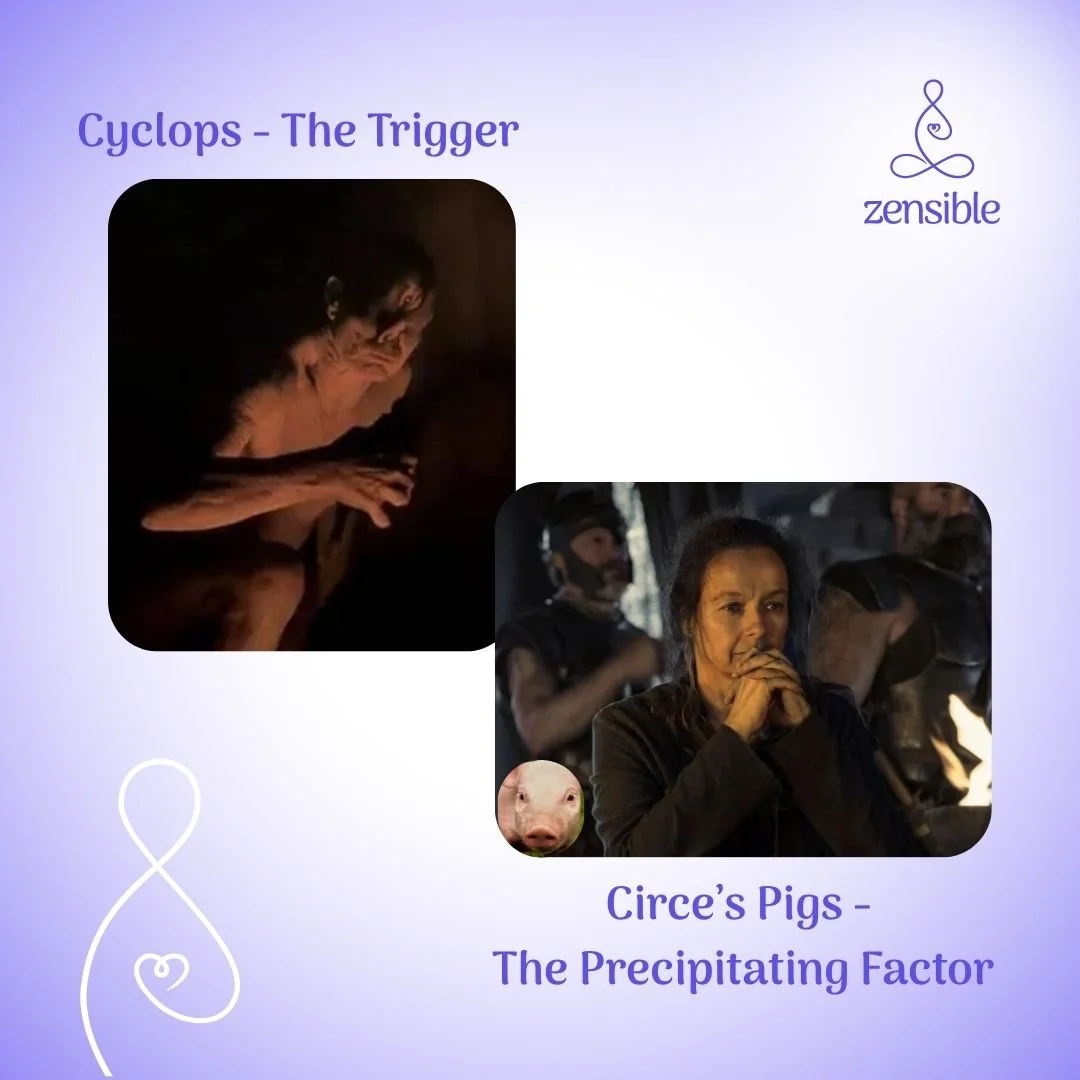
Some psychologist believe the Cyclops could depict unchecked, arrogant human ego. That explanation also works in this context. When Odysseus blinds the beast, it depicts losing that egotistical vision and becoming blind to everything else due to arrogance and the bloodlust of battle. When Odysseus encounters the Cyclops, it is literally his mind giving form to the war that claimed his men, seeing them as tragic victims of the war machine.
2. Circe’s Pigs - The Precipitating Factors
Once the Greeks and Ithacans win the war, a violent pillage of Troy’s city, homes, and people ensues. Odysseus is forced to watch this brutality occur, staying powerless to stop it, and the horror of it stays with him, permanently altering how he sees his own troops.
In his mind's eye, they transform from honorable soldiers into pigs wallowing in filth and muck. Without self-control, they allow their base urges to override their core values. Circe represents that superego part of Odysseus which sees the ugly truth about his forces, forever changing his view of them and precipitating his deep moral hurt.
3. The Sirens - Emotional Trauma
The haunting song of the Sirens symbolises the profound emotional turmoil of post-war trauma. While other men wax their ears to prevent hearing the Sirens, their minds blocked to the trauma by the adrenaline rush of battle and the heady high of victory, Odysseus is different.
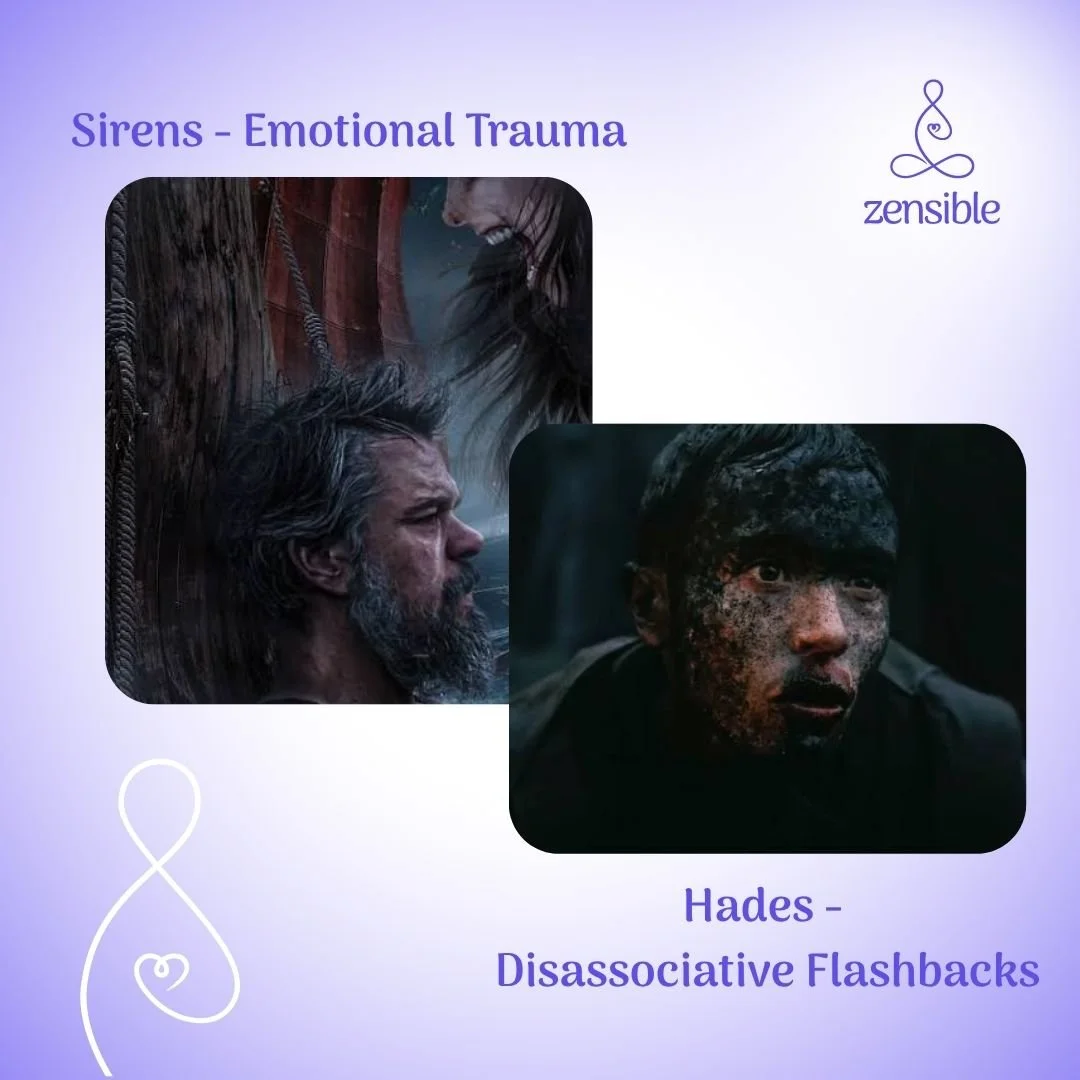
His moral heart is tormented by the aftermath of the war. Like many struggling veterans after a war, Odysseus refuses to close his mind off; he actually wants to feel the torment. He feels a profound psychological need to revisit the destruction in his mind’s eye, torturing himself with the remorse and pain of his actions.
4. Hades - Disassociative Flashbacks
Perhaps the most visually haunting scene in the film is Odysseus’s journey into the underworld, Hades, where he meets the “shades” or ghosts of the men who died under his command. What Nolan depicts to be the physical place beneath the earth is actually a manifestation of the darkest, most inescapable depths of a traumatised mind.
When a war survivor is suffering from PTSD, their mind simply cannot let their dead comrades rest. Instead, their mind keeps them alive as a form of self-punishment for the survivor guilt. One cannot outrun the ghosts of your past, but instead sit with them in the dark, like Odysseus does, confront or grieve them before you can move on.
5. The Lotus - The Addiction
Having subjected himself to the excruciating pain of seeing his decaying comrades and the trauma of the Sirens, Odysseus seeks the only way he thinks he can survive, escape that pain. He turns to the Lotus flower, numbing his mind in a powerful parallel to narcotic and psychedelic addiction.
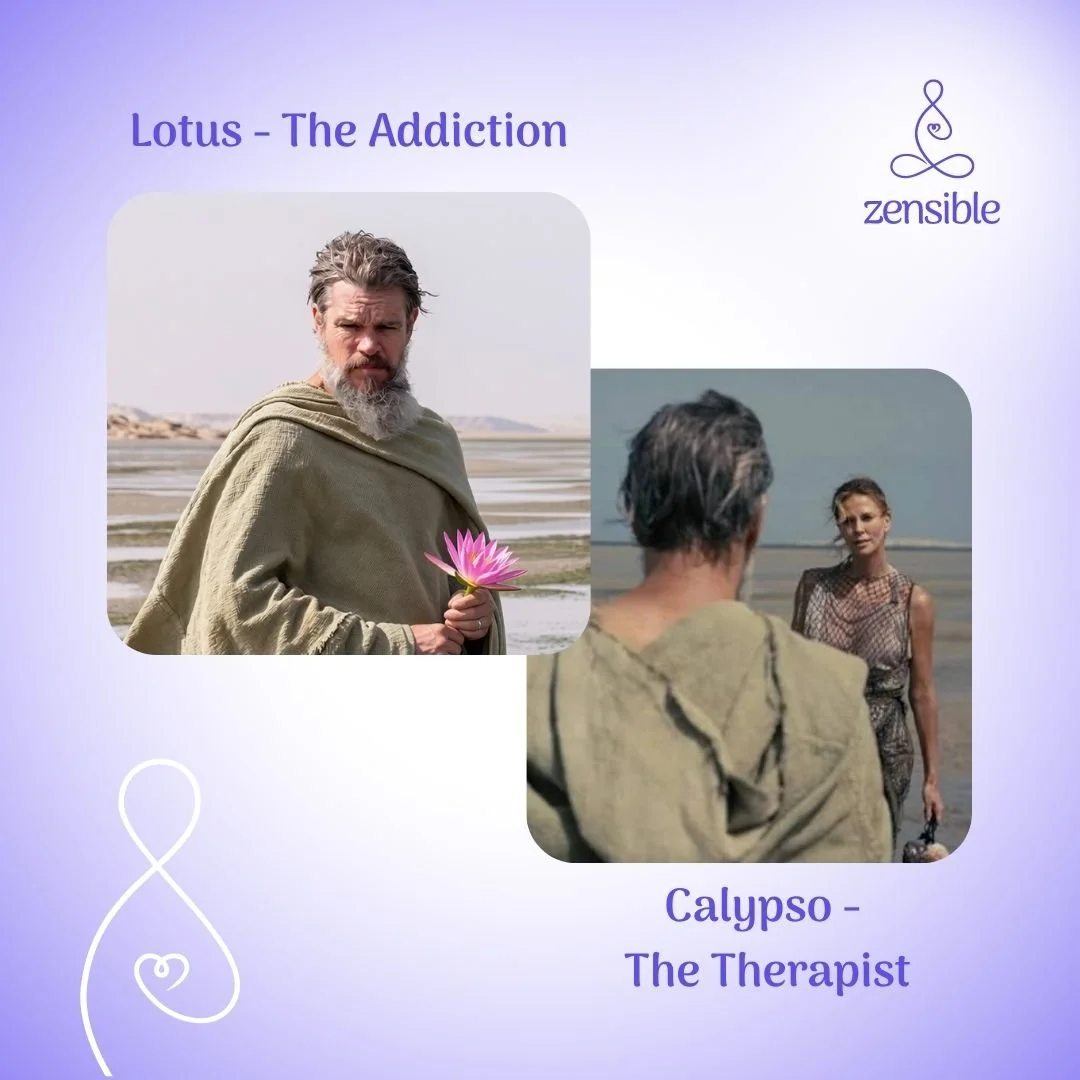
However, his addiction does not just make him forget the pain of the war. Eventually, as narcotics often do, it forces him to forget his joys, his love, and his very identity. And just like real-world substance dependency, he cannot simply stop eating the lotus cold-turkey. He has to slowly and methodically reduce his usage little by little before he can safely escape its harmful effects.
6. Calypso - The Therapist
In Nolan's depiction, Calypso closely assumes the role of a skilled therapist. She provides Odysseus with a safe, secure environment where she slowly coaxes him to remember his past and his true self. More importantly, she guides him to process these memories without becoming overwhelmed by his emotions, allowing him to regain the identity he is most comfortable with.
She patiently helps wean him off his lotus flower addiction. Once he has regained enough of his confidence and core self, she lets him go back to his life, mirroring exactly how a therapist conducts a successful termination session.
There is certainly further symbolism to unravel in the film, such as the stringing of Odysseus’s bow after he comes back, his self-imposed exile, and the suitors he must vanquish to reunite with his wife. But looking strictly at his psychological “voyage”, I am content to sit in silence and revel in the beauty of what Nolan has created. Without ever uttering a single clinical word, the movie depicts the reality of PTSD so precisely that anyone can understand its ultimate message: war and battles bring destruction and endless suffering to those who are forced to be part of it.
Want to learn about more psychology references in movies - Check out their depiction in Bollywood Movies or learn why we love Horror Movies.