7 Signs You Have What It Takes to Be a Therapist
"A counsellor is not primarily a role model – someone who has survived crises and who therefore acts as an example to be followed – but instead is someone who is better seen as a co-worker” -John & Julia McLeod, Counselling Skills

I have been reading John and Julia McLeod’s book, Counselling Skills: A Practical Guide for Counsellors and Helping Professionals, to find answers to the question Do I actually have what it takes to be a good counselor? It is easy to assume that therapists are some super special human beings who have superhero level skills. But the McLeods give out a simpler list that show that you don’t need to be flawless emotional hermit, but only need to be a collaborative partners in problem-solving.
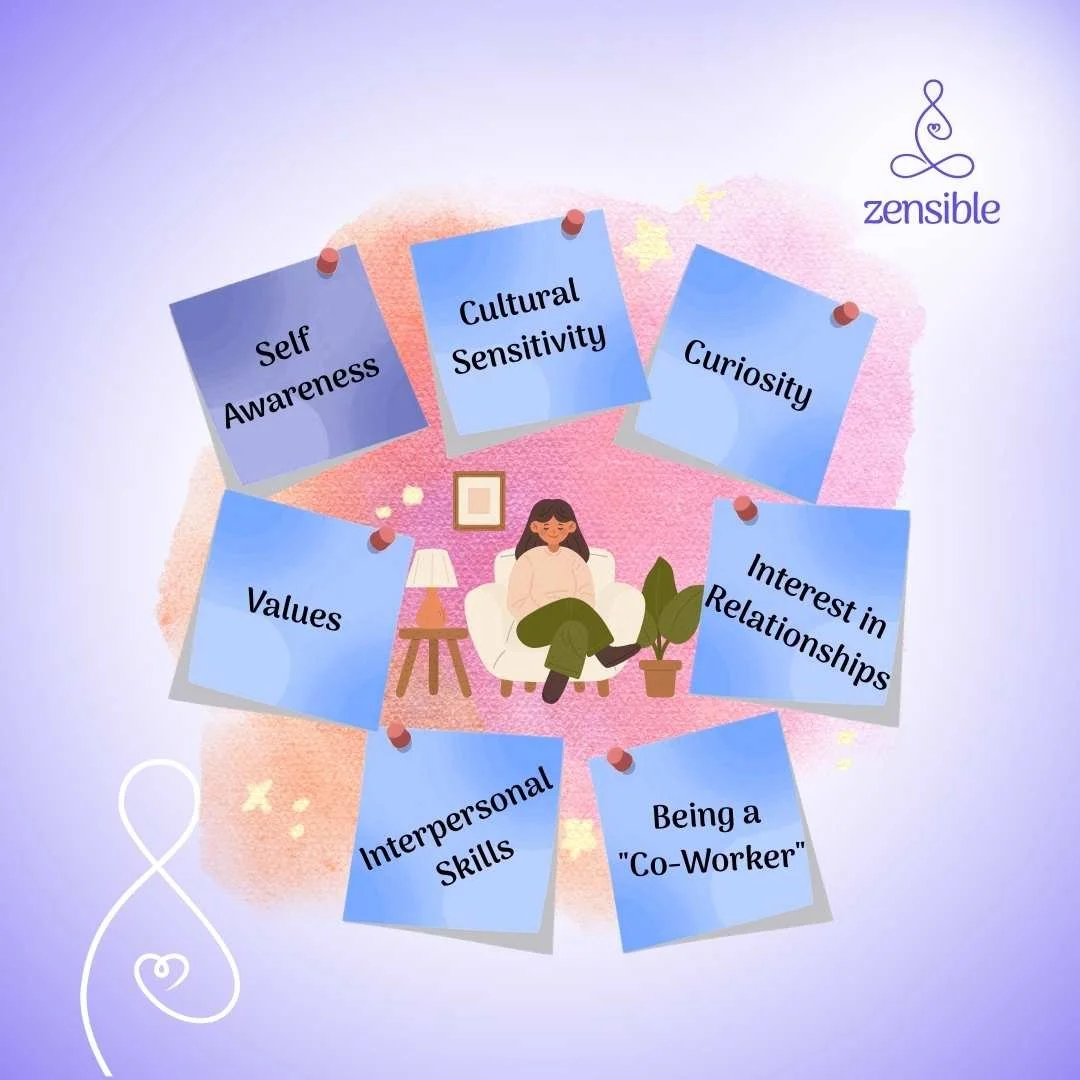
Here are the 7 essential qualities of a counselor that the book outlines and how to test if you already practice them in your daily relationships.
1. Self-Awareness (Knowing Your Triggers)
A counselor has to remain the grounded emotional anchor in a room, especially when someone else is going through a range of emotions - anger, grief, or panic. To do this, you must be acutely aware of your own emotional triggers so you don't project your baggage onto others.
The Everyday Test: Think about the last time a friend came to you venting about a conflict. Did you listen to their experience, or did their story trigger your own unresolved frustrations? If a friend is complaining about a controlling partner, and you recently had a bad breakup, self-awareness is the ability to separate your resentment from their reality. Can you listen without making their story about you?
2. Curiosity About How People Cope
Different people survive stressful days in very different ways. One person might cope by shutting down and binge-watching OTTs for six hours, while another needs a brisk, calf-burning hike to blow off nervous energy. Neither is inherently “right” or "wrong."
The Everyday Test: When someone handles stress differently than you do, what is your default reaction? Do you judge them, or do you get curious? If a colleague pulls away and goes silent during a high-pressure project, a future therapist doesn't label them "lazy." Instead, they genuinely wonder: "Where is that silence coming from? Has this coping mechanism in their past, and is it stopping them from growing?"
3. Cultural Sensitivity
We all view the world through the coloured lens of our own upbringing, family beliefs, and culture. A good counselor can challenge a person’s unhelpful behaviors without ever dismissing or disrespecting the cultural beliefs that shape their identity.
The Everyday Test: Imagine a brilliant, highly educated friend tells you she is turning down a massive corporate promotion because, in her family, caring for her aging parents at home is the ultimate priority. Even if your personal worldview prioritizes career aspirations, can you respect and work within her value system? Cultural sensitivity means you don't force your definition of "wins" onto someone else’s pathway.
4. Values That Affirm Human Worth
It is easy to care for people when they are thriving, polite, and making good choices. It is much harder to maintain respect for someone when they are spiraling, making repetitive mistakes, or acting out of deep insecurity.
The Everyday Test: How do you view people when they are at their lowest? When a family member makes a financial mistake or a friend relapses into a toxic relationship for the fourth time, do you view them as "broken" or "foolish"? A counselor holds an unshakeable belief in human dignity and choices. You can disagree with a behavior while still firmly believing that the person underneath it is fundamentally worthy of respect and capable of change.
5. A Deep Interest in Relationships
Human beings do not exist in vacuums. Our joys, anxieties, identities, and daily stresses are almost entirely entangled in our webs of connection, with partners, parents, children, bosses, and friends.
The Everyday Test: Are you fascinated by the invisible dynamics between people? When a friend is chronically anxious, do you just look at them individually, or do you instinctively zoom out to look at their surrounding ecosystem? Notice if you find yourself naturally observing how a person's relationship with their father affects how they treat their boss, or how a couple's unspoken rules dictate their arguments. A passion for understanding relational webs is a big sign you belong in this field.
6. Nuanced Interpersonal Skills
You can memorize every psychology textbook in the world, but if you cannot translate that theory into comforting, accessible human connection, you cannot help anyone. This skill is a two-way street: articulating your own thoughts clearly, and accurately decoding others.
The Everyday Test: Are you the person in your friend group who hears what isn't being said? Good interpersonal communication means you notice the micro-signals: a slight tightening of the jaw, a forced laugh masking deep shame, or the heavy silence that follows a difficult question. In daily life, it looks like gently saying, "You said you’re fine, but your voice sounds really low today. Do you want to talk about what’s actually going on?"
7. The Commitment to Being a "Co-Worker"
Let's look back at the McLeods' quote: a counselor is a co-worker, not an all-knowing advice dispenser. Many people want to become therapists because they like "giving advice" or telling people how to fix their lives. But real therapy is collaborative.
The Everyday Test: When a loved one comes to you with a problem, do you immediately launch into a lecture with a ten-step checklist of what they should do? Or do you ask guiding questions like, "What do you think your options are here?" and "How can I best give you support while you figure this out?" If you are willing to step into the mud with someone and help them find their answers, rather than just dictating your own, you have the true mindset of a therapist.
So... Do You Have What It Takes?
Before you take the plunge into a psychology degree or a counseling pivot, run an honest self-audit against these seven traits in your daily life.
You don't need to score a 10/10 on all of them right now. Self-awareness, empathy, and communication are muscles you will build over a lifetime of practice and supervision. But ask yourself: Do these everyday relational skills excite me? Do I want to dedicate my life to sharpening them?
If your answer is yes, the mental health field is waiting for you.
Need more help as an early career therapist? Check out more blogs on that subject.