Why Skipping Case Formulations and Progress Notes is Hurting Your Practice
When speaking to experienced therapists across India, a common pattern emerges. Almost everyone regularly write down important points during a session. But more often than not, those raw session notes remain exactly where they were born… buried in a notebook, never to be developed into structured progress notes or a formal case formulation.

In countries like the US or the UK, most clients take therapy using insurance where structured documentation are legally and financially mandatory. In India, however, because clients pay for therapy entirely by themselves, practitioners have no need to submit structured notes. There is no insurance auditor breathing down our neck demanding a clinical rationale.
But just because we can skip developing these notes doesn't mean we should.
Without a structured case formulation, we are stepping into the session room with a blindfold on. Instead of planned therapy sessions; we are just reacting to whatever crisis our client chose to bring in that day.
An excellent paper by Rhonda Goldman and Zoë Goldstein ("Case formulation in emotion-focused therapy", 2022) provides a brilliant framework that is a perfect example for why skipping documentation is hurting our clinical effectiveness. Using the paper's deep case study of a client named Jina, let’s understand why case formulations and progress notes are the ultimate game-changers for our practice.
1. Case Formulation Separates the "Smoke" From the "Fire"
When a client arrives for an intake session, they present us with a complex, tangled web of surface-level symptoms. If we don't take those raw session notes and actively connect them into a conceptual framework, we will end up chasing symptom after symptom instead of treating the person.
In the paper, Jina enters therapy presenting with a severe, acute depressive episode. She is lethargic, hopeless, and struggling to function. If her therapist had skipped a formal case formulation, the treatment plan would have been reactive, focus on behavioral activation, try to lift the depression, and fix the surface-level mood.
However, by mapping Jina’s narrative into a formal case formulation, the therapists looked deeper. They realised the depression was just the "smoke." The actual "fire" was a deeply entrenched, subconscious maladaptive emotions consisting of,
Core fundamental shame and feelings of chronic inferiority.
An intense, historic attachment dread of being permanently rejected and unloved, stemming from childhood emotional abuse.
The Lesson: A case formulation shifts our perspective from “What is wrong with this client today?” to “What is the underlying structural engine driving these repeating patterns?” It ensures we are treating the root cause, saving months of stagnant, directionless sessions.
2. It Stops Us From Getting Lost in Casual Conversational Loops
We’ve all had those cases. We've been seeing a client for eight weeks, the rapport is wonderful, they feel comfortable with us, but... nothing is actually changing. The sessions have accidentally devolved into a weekly chat or a casual venting sandbox.
Progress notes are the ultimate antidote to this stagnation. They force us to track what the paper calls "Process Markers." During her sessions, Jina constantly exhibited specific markers:
Severe Self-Criticism (splitting into an internal "harsh critic" and a "submissive, collapsed self").
Unfinished Business (unresolved, painful emotional injuries directed toward her abusive parents).
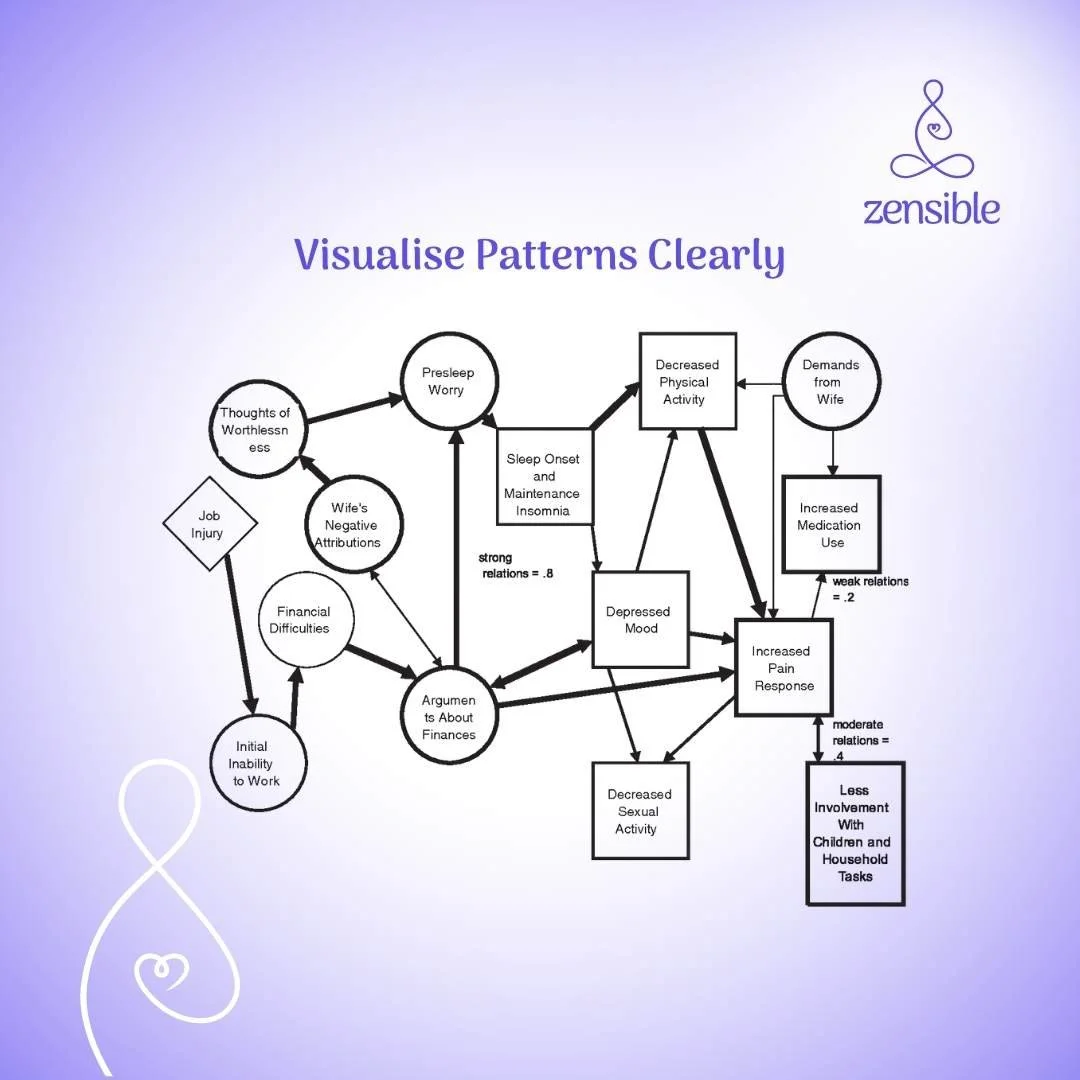
When we write structured progress notes immediately after a session, we document these exact markers. We note how frequently they occur and how the client handles them. The next week, before the client even knocks on our door, we review those notes. We aren't relying on a foggy memory of last week’s conversation. Instead, we look at the ledger of process markers and think, “Today, when she hits the self-criticism marker, we are transitioning straight into a two-chair dialogue to confront that internal critic.”
Structured notes transform therapy from a passive conversation into an active, deliberate intervention.
3. Formulation is a Living, Co-Constructed Data Map
A common misconception among Indian practitioners is that case formulation is a rigid, academic chore, a clinical spreadsheet we fill out on day one and lock away in a cabinet.
The research completely refutes this. Goldman and Goldstein emphasize that a robust formulation is a living, three-stage evolutionary journey co-constructed with the client:
Stage 1: Assessing how the client processes emotions early on as their story unfolds.
Stage 2: Identifying and organizing the core conflict or painful shame schemes.
Stage 3: Actively tracking the markers week-by-week to introduce experiential transformations (like chair work).
When we build case formulations and update them via progress notes, we are holding up a mirror to the client. We can sit with them and show them the data: “Look at how your system automatically defaults to self-sabotage whenever we get close to discussing rejection. We mapped this on week two, and we are seeing it play out again today.” This empowers the client, strips away therapist bias, and fosters an unshakeable therapeutic alliance grounded in objective evidence.
4. Prevent Premature Client Departure
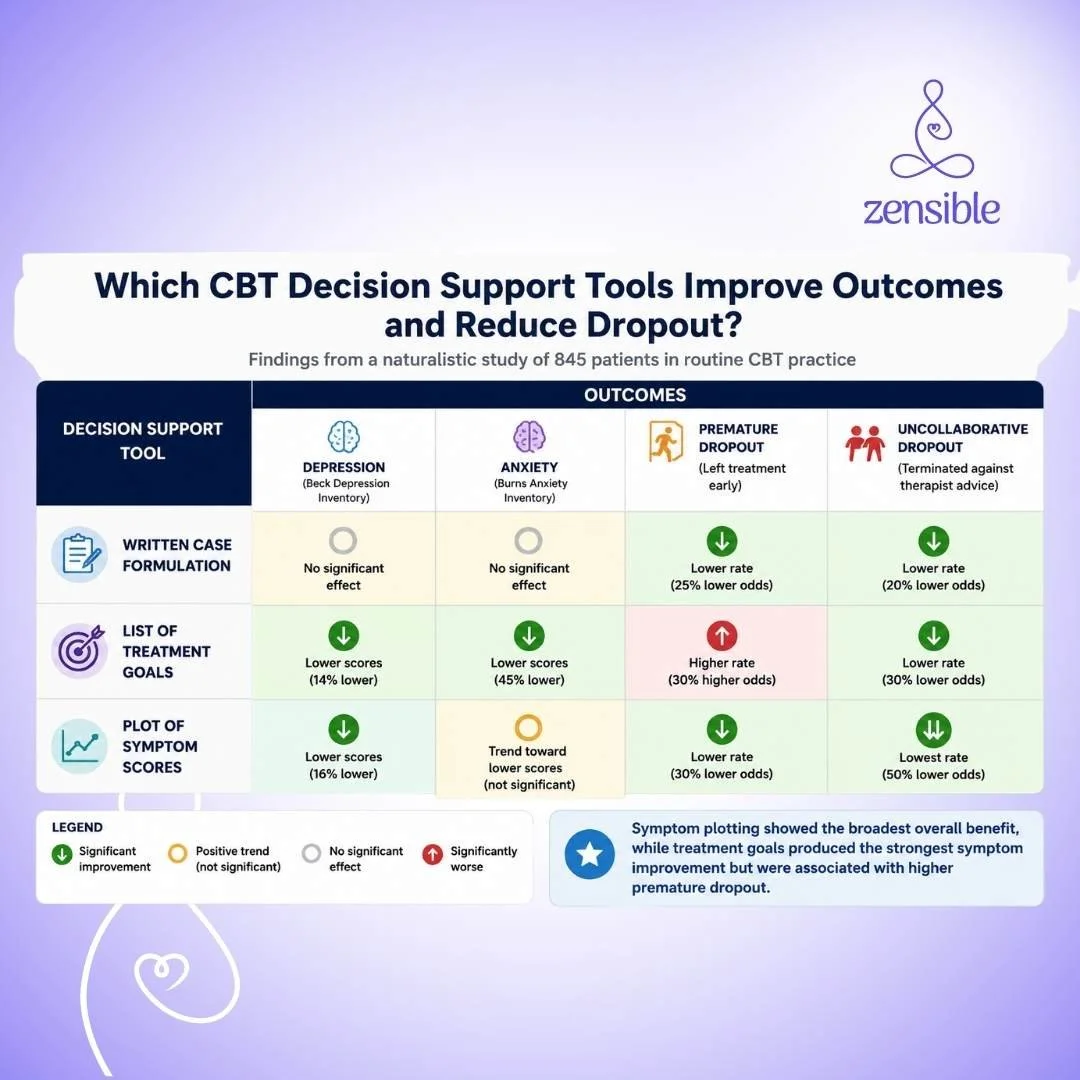
Research has also shown that using case formulations, identifying and listing therapy goals and tracking symptom prevalence along with severity will help clients from prematurely dropping off from therapy, especially against therapist advice. Additionally, in cases of depression or anxiety, these structured therapy tools also helped with reducing the severity and improving therapy outcomes.
The improved therapeutic alliance these written documentation create is because it enables both the therapist and the client to review them together and use them as a guide. This collaborative process brings agency back to the client with transparency, motivating them to both stick to therapy and to try the interventions better between sessions, thereby accelerating their progress.
Shifting the Paradigm
The fact that Indian private practice doesn't mandate structured notes via corporate insurance is an opportunity, not an excuse. It means we have the freedom to document cases purely for the sake of clinical excellence, untethered by administrative boxes.
We don't need a mountain of paperwork to make this shift. Moving from raw, chaotic doodles to an organised ecosystem, where our initial case formulation lives side-by-side with our session-by-session progress notes, can happen entirely digitally.
Platforms like Zensible are built specifically to bridge this gap for modern practitioners. By providing a streamlined, secure clinical workflow to log case conceptualizations, cross-reference process markers, and track long-term symptom trends, it strips away the administrative friction. It gives our brain the organisational structure it needs so we can focus entirely on the human being sitting across from us.
Stop leaving your clinical wisdom in random notebooks. Start mapping the journey. Your clients, and your own therapeutic peace of mind, deserve it.
Want to know more about structured notes in therapy. Check out the following on Session Notes.