
Top Mood Tracking Apps: Helping Clients Identify Patterns

As much as I love the emotion wheel, my personal favorite has to be the “emoji wheel”... something that’s still not widely used by most therapists. One of the key goals in therapy is tracking a client’s mood, keeping a check on it, understanding triggers, and making interventions accordingly. Sounds like quite a lot, right?
And that’s not even counting the admin and note-taking work that comes with it (which, by the way, tools like Zensible can help reduce). So, if you’re a therapist… or a trainee on your way to becoming one… here are some AI-based mood tracker dashboards, along with tips on how to recommend them to your clients, plus a few prompts you can suggest to get them started!
A client’s feelings and mood are deeply personal, often vulnerable, and highly confidential. Many people naturally hesitate to share such aspects of themselves due to pre-existing fears or concerns. Sometimes they fail to share these because they aren’t aware of them or aren’tactively monitoring them.
However, when they do choose to open up, it becomes our responsibility to honour that trust by maintaining strict confidentiality. When a client entrusts you with something so personal, it’s important to support them with tools that are both safe and reliable. With that in mind, here are some AI-verified (and secure) mood-tracking apps that are easy for clients to navigate.
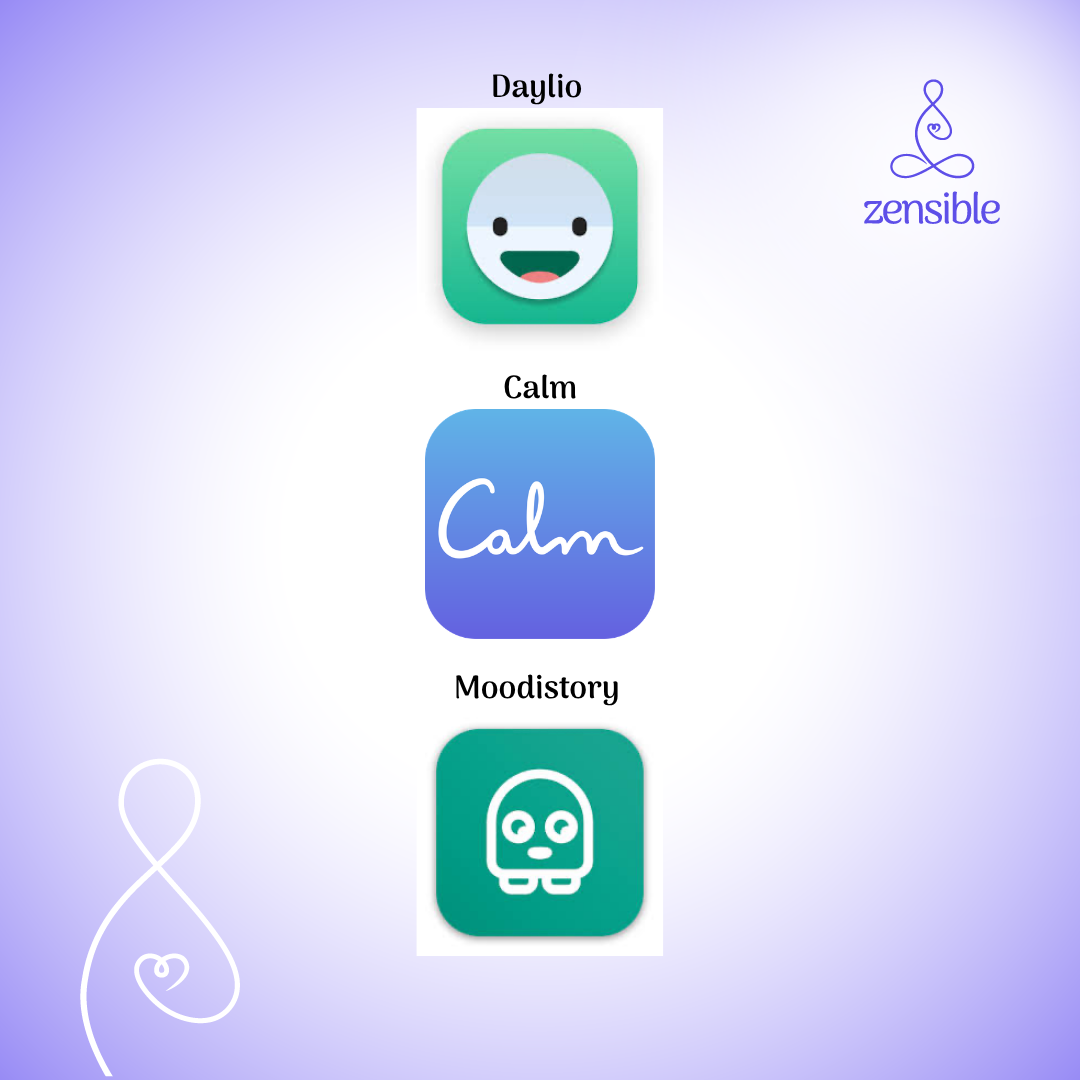
1. Daylio
Most beneficial for stats enthusiasts.
Includes daily mood tracking.
Fully customizable (colours, emojis, activities).
Allows sharing reports in PDFs.
2.Calm
Offers structured mindfulness programmes
Includes regular mood monitoring, helping therapists understand triggers
Supports emotional regulation during times of stress.
3.Moodistory
Helps you link your current moods to potential triggers, allowing for better self-understanding.
Highly customizable and sends daily reminders for check-ins.
Provides detailed mood reviews on a daily, monthly, and yearly basis.
Six Steps to Recommending Apps
1.Begin by understanding the client’s needs, particularly what they require immediate focus on and how such apps could support their therapeutic goals.
2. Once their needs are identified, use the initial sessions to explore how they engage with therapy homework and assess their comfort level with using digital tools or apps for the same.
3. If the client shows moderate to high openness toward using apps. Start with psychoeducation…explain how these apps work, address any concerns or doubts, and clearly reinforce that these apps are not a substitute for therapy, but rather a supportive tool alongside it.

4.Based on the client’s comfort level, along with your prior research and consultations with co-therapists, recommend suitable apps that align with the client’s needs.
5.Encourage clients to consistently complete their emotion check-ins and ensure they fill in all necessary details. Review their progress tracking through the insights, results, or statistics generated by the app.
6.Use this data to guide and structure sessions moving forward. And make it into a collaborative effort between you and your client.
With that in mind, we come to the end of the blog post. I hope these key takeaways have helped you learn something new. These 3 apps are just a few examples…there are many more available in the market which, when researched properly, can be beneficial for your clients, both now and in the future. And with that, I’ll see you in the next blog post!
